
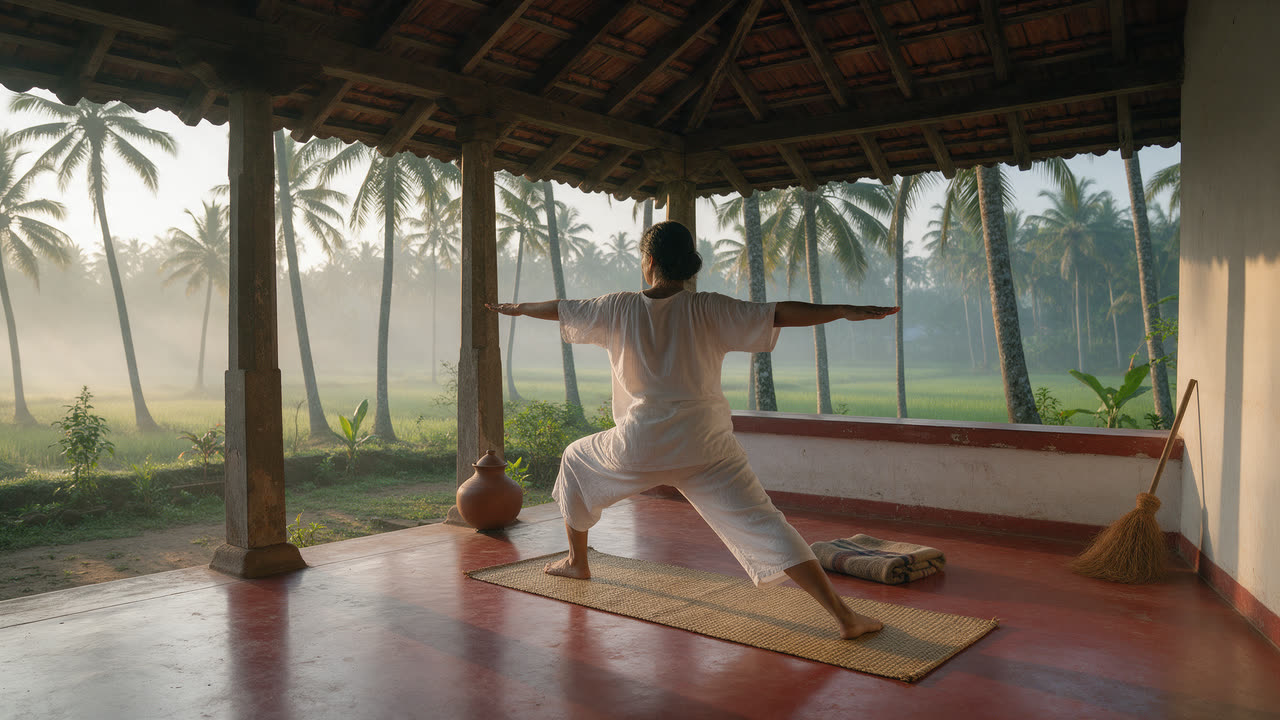
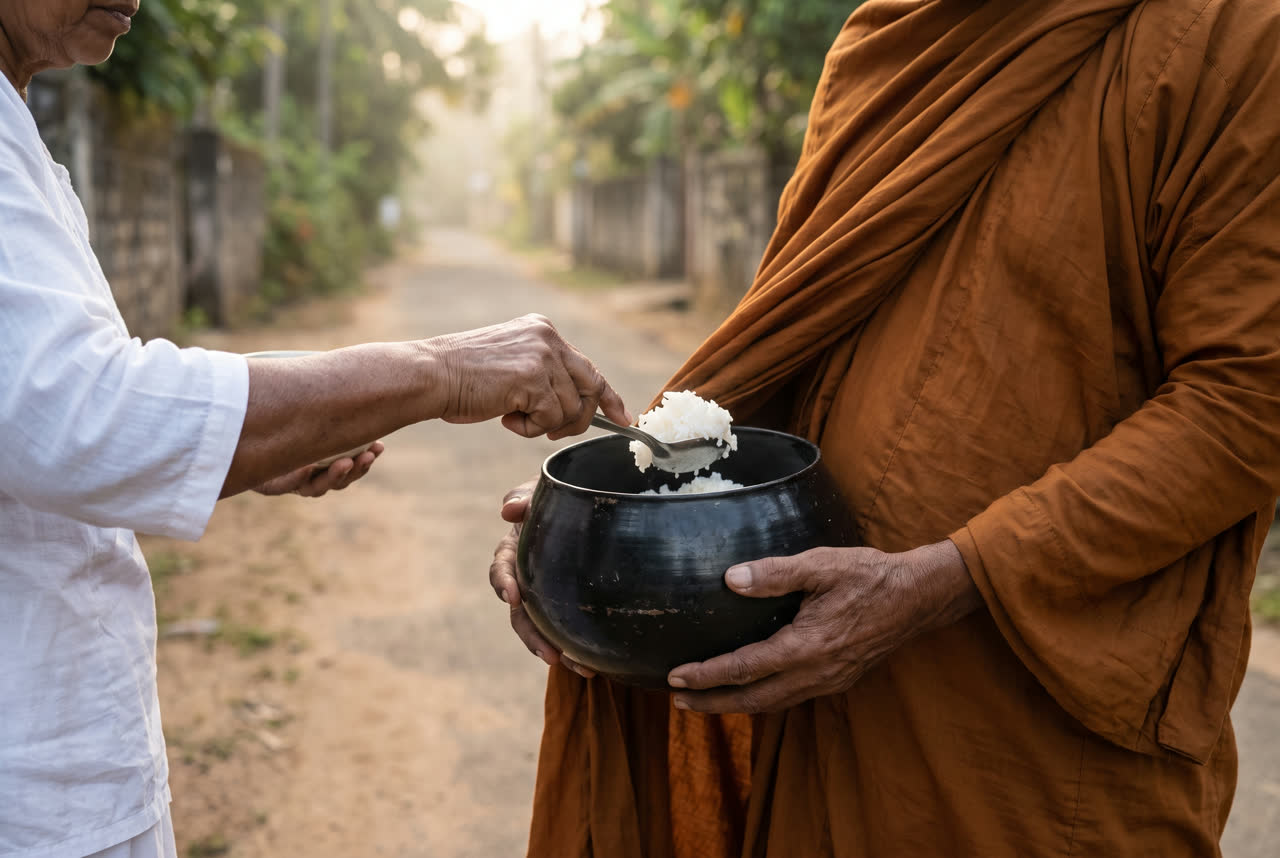
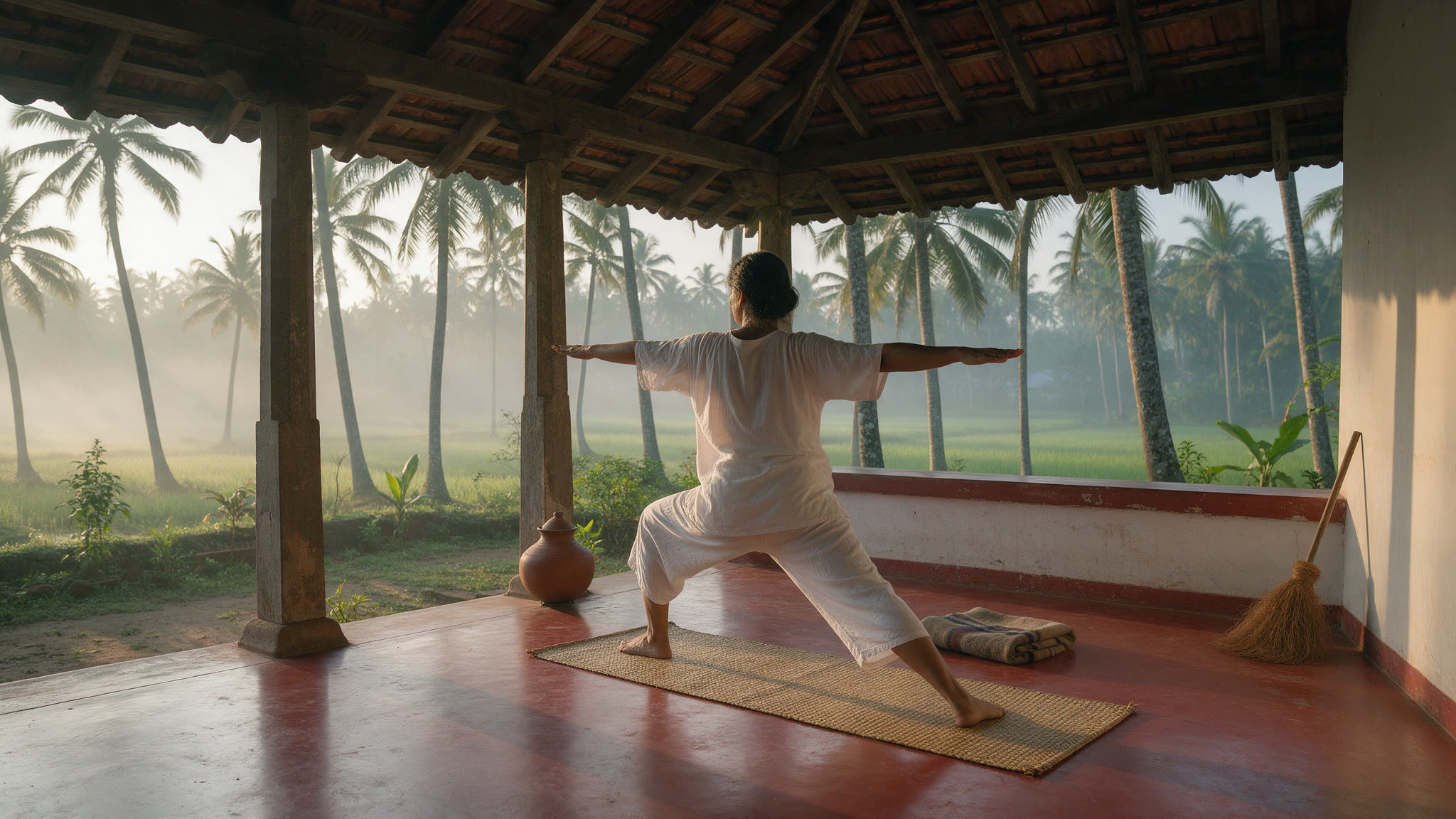
A woman in white, seen from behind, holding warrior pose on a reed mat on the red cement verandah of an old Sri Lankan house at sunrise, coconut palms and paddy fields beyond

Step 2 of 3

Yoga

Yoga is older than any single religion that claims it. Here it is the foundation: the few shapes and the one skill, slow breathing, that the sitting chapter relies on.

How to do it

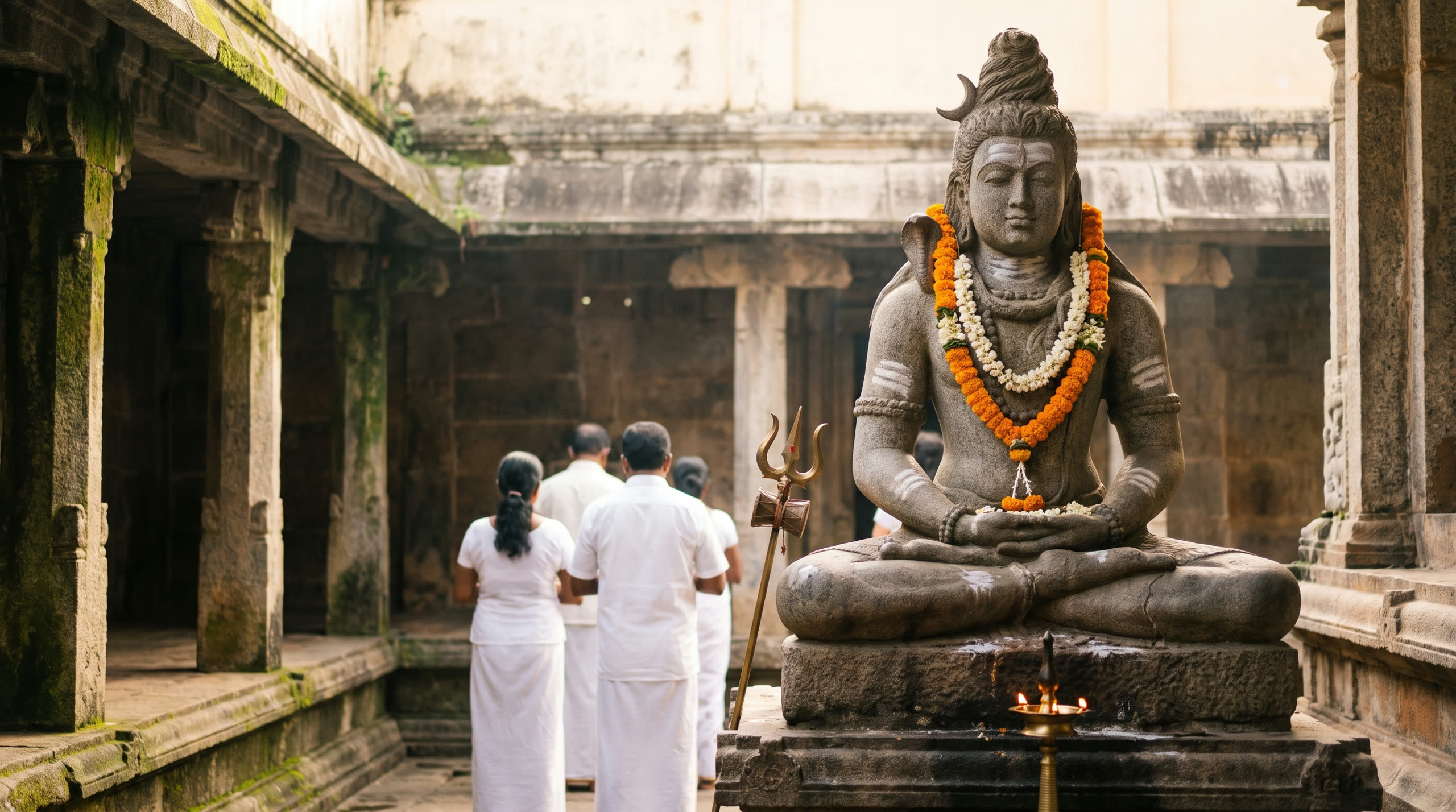
The Indian tradition names Shiva as Ādiyogi, the first yogi, who sat in stillness in the Himalaya and taught seven sages what he had found. It is a story about where the practice came from, not a demand that you believe anything. Around two thousand years ago Patañjali wrote the practice down as eight limbs. Only one of them is posture.

The Buddha was a yogi before he was the Buddha. The Theravāda texts describe him learning the deep absorptions from two yoga teachers, Āḷāra Kālāma and Uddaka Rāmaputta, and leaving when he found they were not the end. The two traditions parted. They parted from the same ground, and they still share most of the path.

A stone statue of Shiva seated in meditation as Adiyogi, the first yogi, garlanded with marigolds in the courtyard of a Sri Lankan kovil
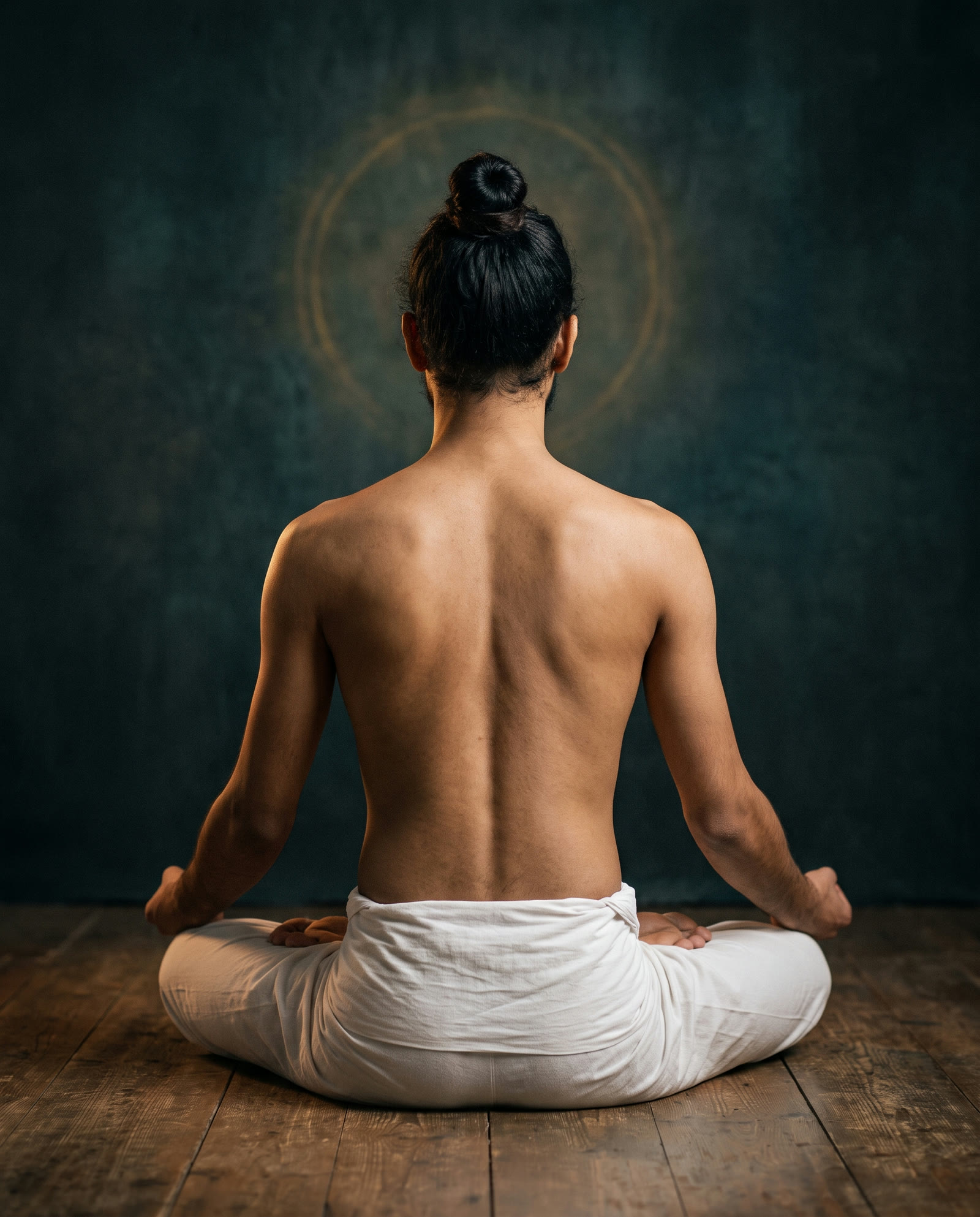
A yogi seated in lotus pose, seen from behind against the dark, the spine straight

The seven centres.

The yoga tradition describes seven centres along the spine, the chakras. In the old picture, a sleeping energy, kundalini, rises through them from the root to the crown as practice deepens. It is a map from the tradition, offered as one. The slow breathing taught here works whether or not you hold it.

  1. Mūlādhāra Root Grounding. Feeling the earth under you.
    Where
    Base of the spine
    Element
    Earth
    Seed sound
    LAM

    Try this Sit, and feel the weight of the body settle into the ground. Breathe slowly toward the base of the spine.

  2. Svādhiṣṭhāna Sacral Feeling, and the flow of life.
    Where
    Lower belly, below the navel
    Element
    Water
    Seed sound
    VAM

    Try this Let the hips soften. Breathe into the lower belly and watch it rise and fall.

  3. Maṇipūra Solar plexus Will, and the fire of effort.
    Where
    Above the navel
    Element
    Fire
    Seed sound
    RAM

    Try this Sit tall. On each out-breath, draw the navel gently in, then let it go.

  4. Anāhata Heart Love and kindness, without conditions.
    Where
    Centre of the chest
    Element
    Air
    Seed sound
    YAM

    Try this Open the collarbones. Breathe into the chest, and wish one person well.

  5. Viśuddha Throat Truthful speech.
    Where
    The throat
    Element
    Space
    Seed sound
    HAM

    Try this Soften the jaw. Hum on the out-breath and feel the throat hum with it.

  6. Ājñā Third eye Insight. Seeing clearly.
    Where
    Between the eyebrows
    Element
    Mind and light
    Seed sound
    OM

    Try this Close the eyes. Rest attention lightly between the eyebrows, without straining.

  7. Sahasrāra Crown Awareness itself. The light.
    Where
    Crown of the head
    Element
    Beyond the elements
    Seed sound
    Silence

    Try this Let the effort go. Sit, simply aware of being aware.

How to do it

Ten sessions in order. Each builds on the last, and the last one is simply sitting and breathing well.

Breath pacer

Four in, six out.

Six breaths a minute. Through the nose, no holding, the out-breath longer than the in. Follow the ring, or close your eyes and follow the word. Three minutes is enough to notice the change.

01 Standing, and finding the ground How to stand so the weight goes through the feet. Mountain pose, and the first slow breath. 20 min Being recorded
  1. Feet hip-width, weight even between heel and ball.
  2. Knees soft, pelvis level, crown of the head lifting.
  3. Five breaths, counting four in and six out.
Language
සිංහල · English
For
Anyone, no experience
Recording
With Jayani, in Colombo. The notes are the session until then.
02 The spine, and the breath Cat and cow, slow. Learning that the breath moves the spine before the muscles do. 20 min Being recorded
  1. On hands and knees, wrists under shoulders.
  2. Inhale, the belly drops and the chest opens. Exhale, the back rounds.
  3. Ten rounds, led by the breath rather than by counting.
Language
සිංහල · English
For
Anyone, no experience
Recording
With Jayani, in Colombo. The notes are the session until then.
03 Sitting without pain The three ways to sit, and how to choose. Hips above knees, always. 20 min Being recorded
  1. A folded blanket or a cushion under the sitting bones.
  2. Cross-legged, kneeling, or a chair. None is better. The one you can stay in is better.
  3. Five minutes seated, noticing where the body complains, and adjusting once.
Language
සිංහල · English
For
Anyone, no experience
Recording
With Jayani, in Colombo. The notes are the session until then.
04 The hips Opening the hips so that sitting stops being a negotiation. 20 min Being recorded
  1. Lunge, low and long, with the back knee down.
  2. Pigeon, with support under the hip. No forcing.
  3. Hold each for eight slow breaths. Change sides.
Language
සිංහල · English
For
Anyone, no experience
Recording
With Jayani, in Colombo. The notes are the session until then.
05 The shoulders and the neck Where most people carry the day. Letting it down. 20 min Being recorded
  1. Shoulder rolls, slow, with the breath.
  2. Eagle arms, then arms wide. Neck releases, chin to chest.
  3. Finish lying on the back, arms open.
Language
සිංහල · English
For
Anyone, no experience
Recording
With Jayani, in Colombo. The notes are the session until then.
06 Forward folds Bending toward the floor, which asks for patience more than flexibility. 20 min Being recorded
  1. Standing fold with soft knees. Seated fold with a straight back first.
  2. The aim is the length of the spine, not the distance to the toes.
  3. Six breaths in each. Come up slowly.
Language
සිංහල · English
For
Anyone, no experience
Recording
With Jayani, in Colombo. The notes are the session until then.
07 Balance Tree pose and the attention it needs. The body teaching the mind to stay. 20 min Being recorded
  1. Tree pose, foot on the calf or the thigh, never the knee.
  2. Eyes on one point. When the mind wanders, the body wobbles. Notice that.
  3. Thirty seconds each side, three times.
Language
සිංහල · English
For
Anyone, no experience
Recording
With Jayani, in Colombo. The notes are the session until then.
08 Twists Rotation through the spine, gently, after the hips and shoulders are open. 20 min Being recorded
  1. Seated twist, lengthening on the inhale, turning on the exhale.
  2. Supine twist, knees to one side, arms open.
  3. Hold each for eight breaths.
Language
සිංහල · English
For
Anyone, no experience
Recording
With Jayani, in Colombo. The notes are the session until then.
09 Slow breathing The one skill the sitting chapter depends on. Four in, six out, for ten minutes. 20 min Being recorded
  1. Seated. One hand on the belly.
  2. Inhale through the nose for a count of four. Exhale for six. No holding.
  3. Ten minutes. Use the breath pacer on this page to keep the rhythm.
Language
සිංහල · English
For
Anyone, no experience
Recording
With Jayani, in Colombo. The notes are the session until then.
10 Sitting, and breathing Everything so far, in one session: the body prepared, the breath slow, the mind beginning to settle. 25 min Being recorded
  1. Ten minutes of movement from the earlier sessions.
  2. Ten minutes seated with slow breathing.
  3. Five minutes of simply sitting. The meditation chapter begins here.
Language
සිංහල · English
For
Anyone, no experience
Recording
With Jayani, in Colombo. The notes are the session until then.

What you need

  • A mat, or a folded blanket

    Anything that stops the floor being cold.

  • Twenty minutes

    The sessions are twenty to twenty-five minutes. None of them need warming up.

  • Nothing else

    No blocks, no straps, no special clothing. Loose and comfortable is enough.

What the research shows

Real studies, in plain words, with what each one does not show. None of them is a claim about the scrub.

Practise it with Jayani, in person.

Small groups in Colombo. No experience needed.

Times and place are examples until the first schedule is confirmed.