


Asana: learning to sit
Āsana means seat. What the old texts ask of a posture, five shapes to begin with, and the few rules that keep the practice safe.
සිංහලෙන් කියවන්න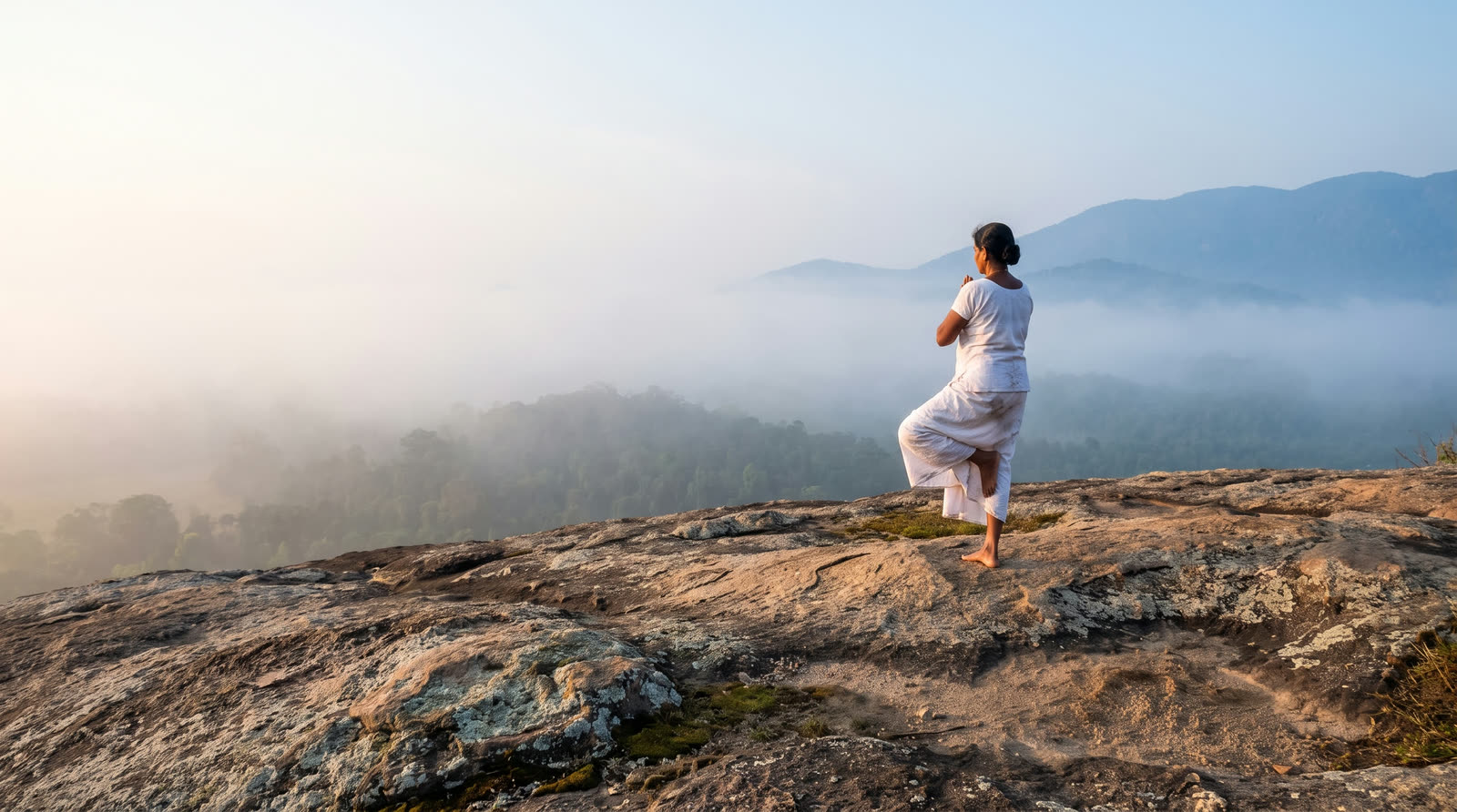
The Sanskrit word āsana means seat. In the Yoga Sūtra, Patañjali gives it three words: sthira sukham āsanam, the posture is steady and easy. In the next verse he says how: by relaxing effort, and by letting attention rest on something boundless. That is the whole of what the oldest text asks of posture. Nothing about flexibility.
The Haṭha Yoga Pradīpikā, written about a thousand years later, describes fifteen postures, most of them seated. The many standing sequences taught in studios today grew mostly in the twentieth century. They are useful. They are also, historically, a preparation for the seat.
Five to begin with
These five are the spine of the ten foundations taught in the yoga chapter.
- Tāḍāsana, mountain. Stand with feet under the hips, weight even between heel and toe, crown lifting. It teaches the line that every other posture keeps.
- Vṛkṣāsana, tree. One foot on the opposite inner calf or thigh, never on the knee. Balance is attention you can feel.
- Bhujaṅgāsana, cobra. Lying face down, hands under the shoulders, lift the chest a little using the back more than the arms. It wakes the spine that sitting needs.
- Bālāsana, child. Knees wide or together, forehead to the floor, arms resting. The posture to return to whenever something is too much.
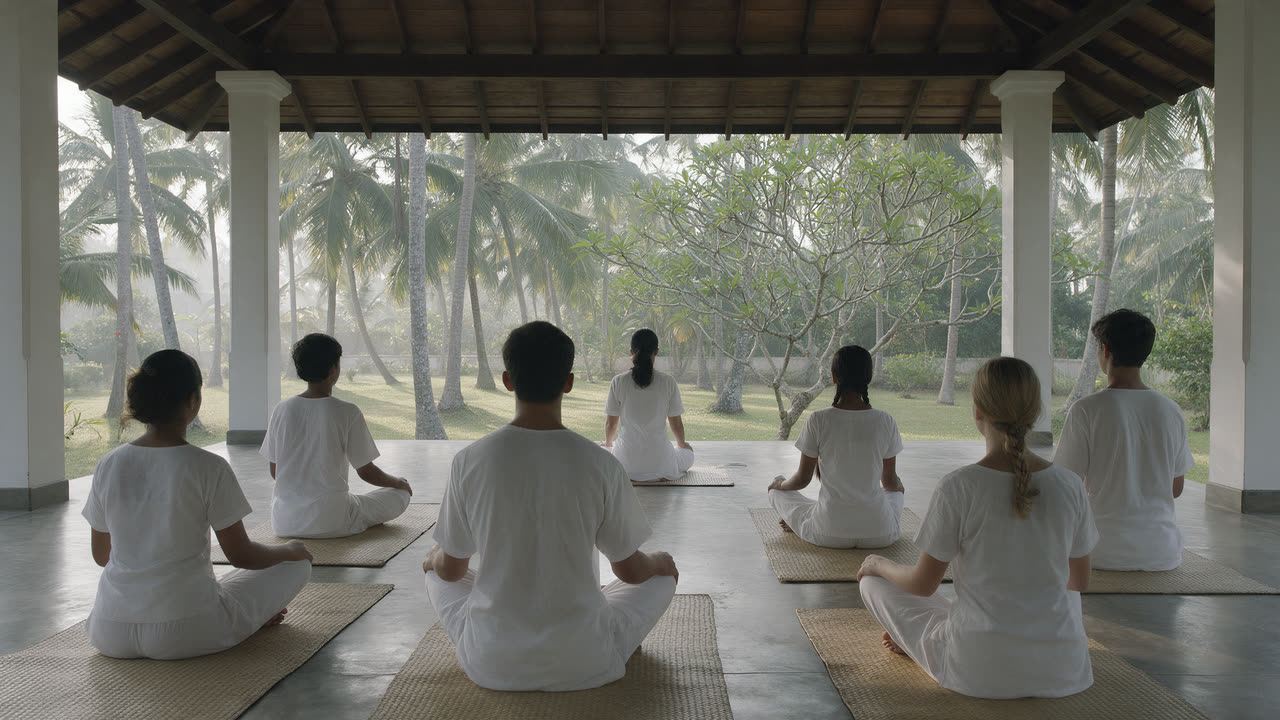
- Sukhāsana, easy seat. Cross-legged on a folded blanket so the hips are higher than the knees. The seat the other four prepare. Sit for three minutes and simply breathe.
Rules that keep it safe
- No pain. Stretch is a sensation; sharp or joint pain is a signal to come out.
- Breathe through the nose, slowly. If the breath becomes strained or held, the posture is too much.
- Move into a shape and out of it slowly. Most injuries happen on the way in or out.
- Adapt freely. A chair, a wall or a cushion is not cheating. If you have back, knee or blood-pressure problems, or are pregnant, learn with a teacher.
Why it matters for meditation
The Buddha’s instruction for meditation begins: sit down, cross the legs, set the body upright. For many people the body is what ends a sit, not the mind. Ten minutes a day of these shapes, for a few weeks, is often the difference between sitting for five minutes and sitting for twenty.