

Shiva, the first yogi
Why the yoga tradition begins with Shiva, what the trident, the moon and the third eye stand for, and where Shiva has been worshipped in Sri Lanka for over two thousand years.
සිංහලෙන් කියවන්න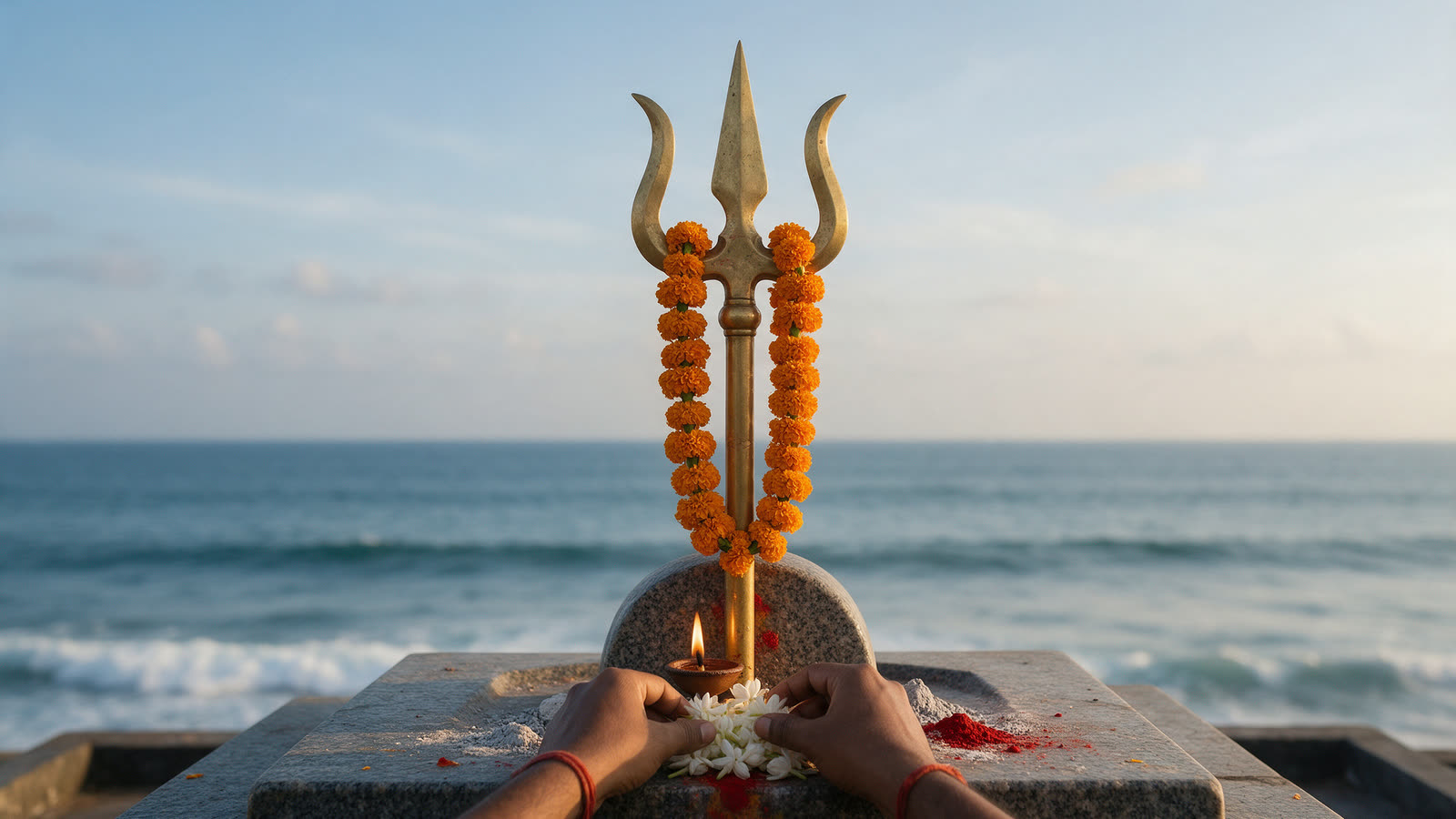
The Haṭha Yoga Pradīpikā, the fifteenth-century handbook that most modern posture practice descends from, opens with a salutation: śrī ādināthāya namo’stu tasmai, homage to Ādinātha, the first lord. Ādinātha is Shiva. In the Nāth tradition that wrote the haṭha texts, Shiva is the first teacher of yoga, and the practices were handed down from him.
The story told today is simple. Shiva sat in stillness in the Himalaya for a very long time. Seven seekers, the saptarṣi, waited by him until he agreed to teach them, and they carried what he taught across the world. Read it as a story about where the practice came from. It does not ask you to believe anything to do the practice.
What his symbols mean
Images of Shiva are dense with meaning, and most of it is about the inner work.
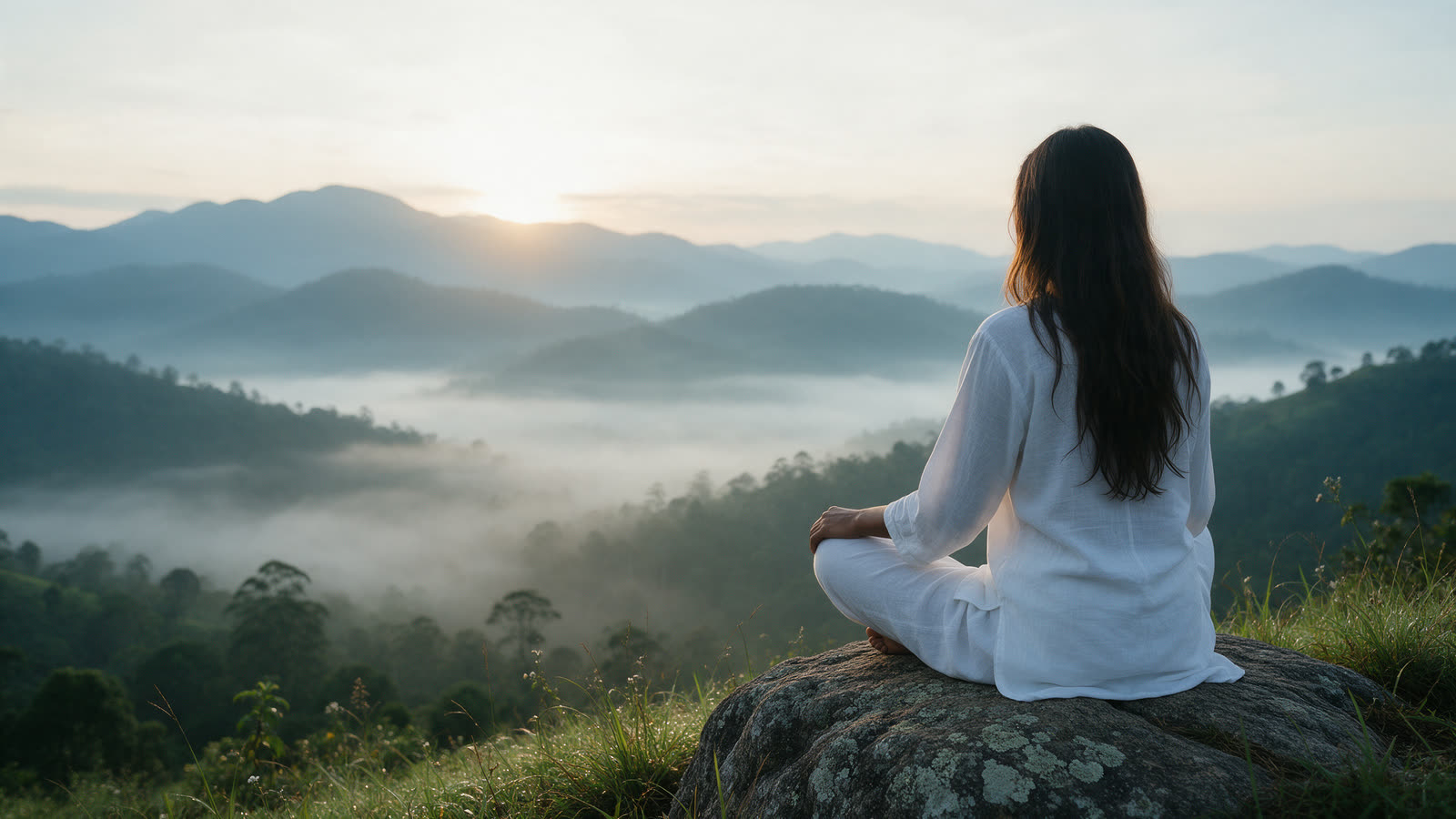
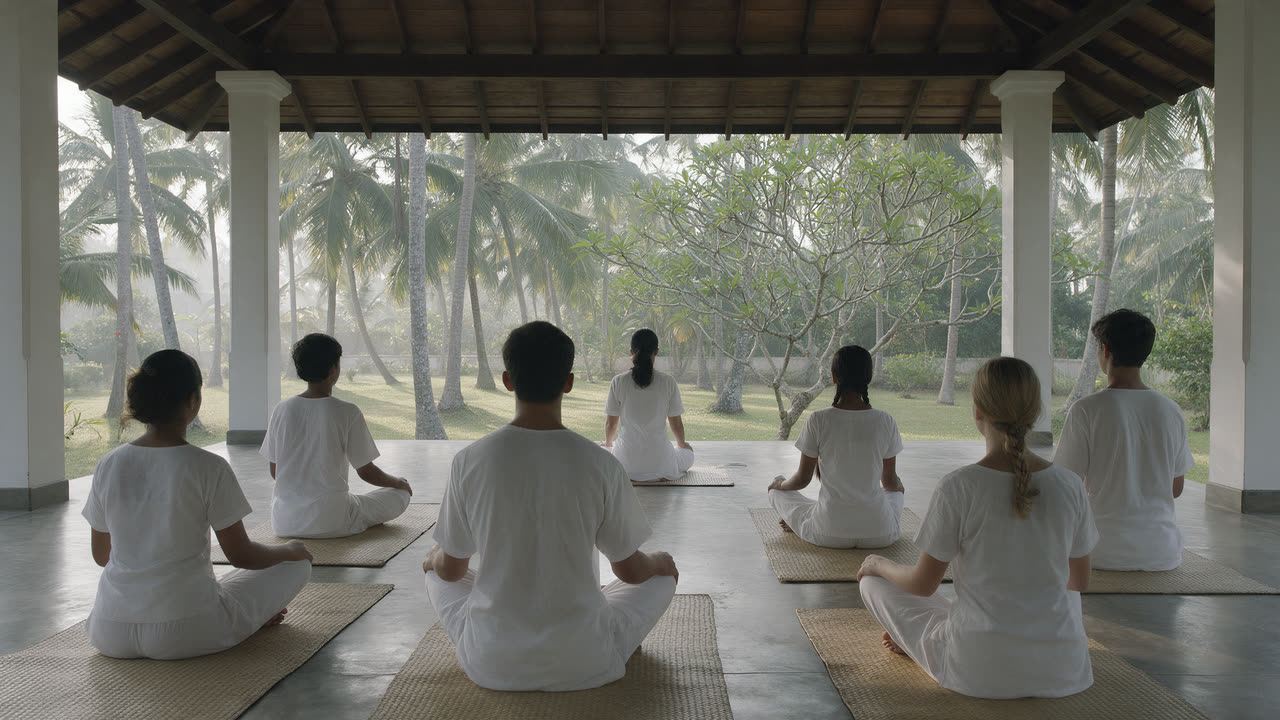
- The seated, upright body. Shiva is most often shown as a yogi: cross-legged, spine straight, eyes half closed. It is the posture this site teaches, and it is the oldest picture of meditation we have.
- The trident, triśūla. Three prongs, read in many ways: past, present and future; creation, keeping and dissolving; or the three channels of the subtle body, iḍā, piṅgalā and suṣumnā, along the spine.
- The third eye. Seeing that is not with the physical eyes. In the chakra map it sits at ājñā, between the eyebrows.
- The crescent moon and the river Gaṅgā in his hair. Coolness and flow held at the crown. The fierce power of the god is shown as cooled and contained.
- The ash on his skin. Everything burns down to this. A reminder of impermanence, worn openly.
- Naṭarāja, the dancer. Shiva dancing in a ring of fire, one foot on the small figure of forgetfulness. The cosmos as rhythm, and stillness at its centre.
Shiva in Sri Lanka
Shiva is not foreign here. The island’s Hindu tradition names five ancient Shiva temples, the pañca īśvaram, on its coasts: Naguleswaram at Keerimalai, Ketheeswaram near Mannar, Koneswaram at Trincomalee, Munneswaram near Chilaw, and Tondeswaram at Devinuwara, which was destroyed in the sixteenth century. Many Sri Lankan Buddhists also visit Shiva shrines, and the island has lived with both for a very long time.
How Shiva sits on this site
Shiva appears here as the teacher at the source of yoga, shown with the respect a sacred image is owed: at eye level, never cropped, never beside a price. You do not need to worship anyone to practise. If you are a Hindu, this is your tradition, and it is honoured. If you are a Buddhist, it is the ground the Buddha himself walked on before he went further.