



Pranayama: the breath you can steer
Prāṇāyāma means extending the breath. What the texts describe, what a 2018 review of the research found, and four practices that are safe to start with today.
සිංහලෙන් කියවන්න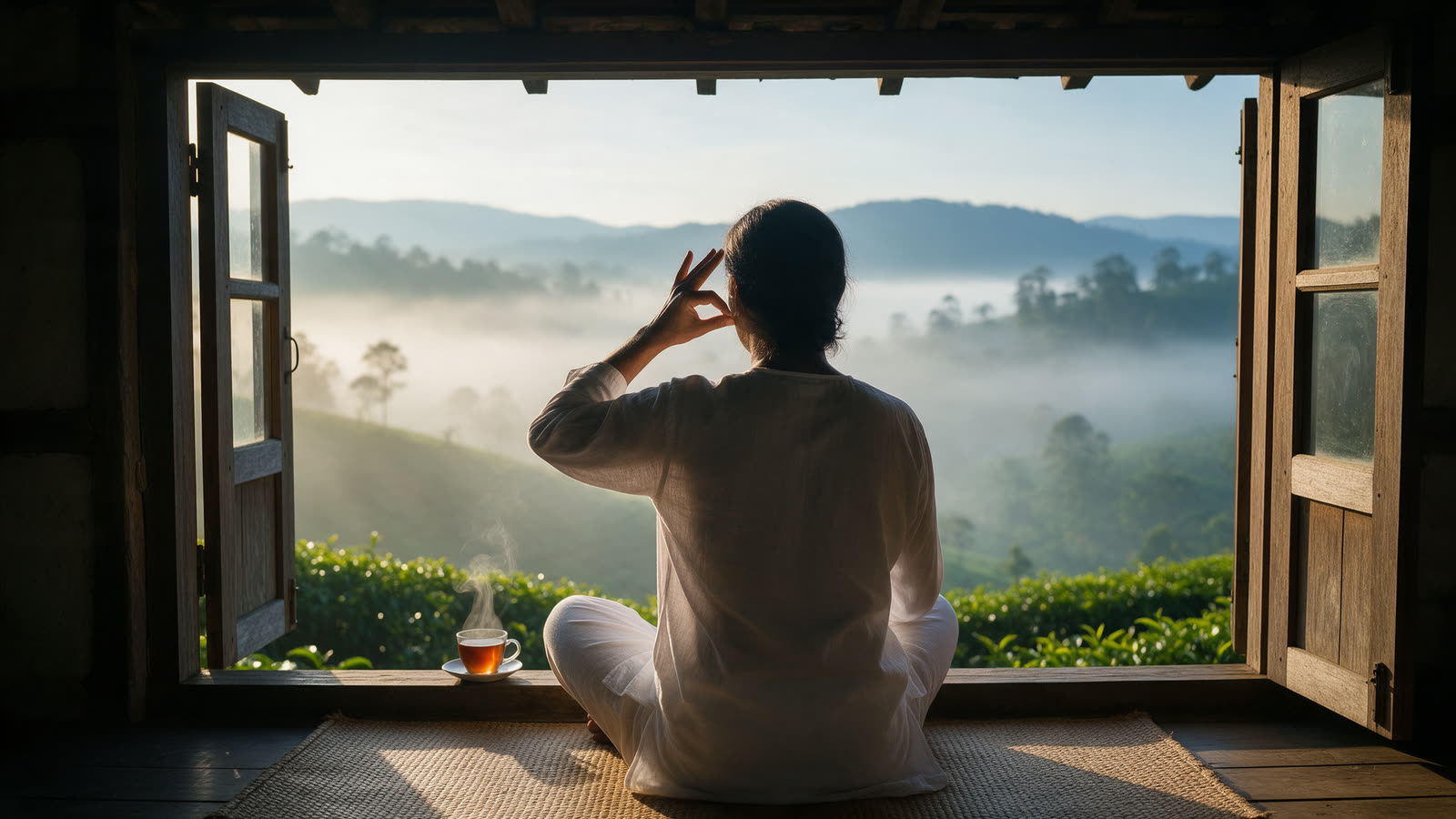
Prāṇa is breath, and life. Āyāma is extending, drawing out. The Yoga Sūtra places prāṇāyāma fourth of its eight limbs, after conduct and posture, and defines it simply: a pause in the movement of in-breath and out-breath, once the seat is steady. The Haṭha Yoga Pradīpikā gives it a whole chapter, with eight kinds of breath retention, and a warning at the start: the breath should be brought under control slowly, the way an elephant or a tiger is tamed, or it harms the one who practises.
Why the breath
The breath is the one function of the nervous system you can steer directly. Your heart rate and digestion run on their own. Your breath runs on its own too, until you choose to take it over.
A 2018 systematic review of fifteen studies (Zaccaro and colleagues, Frontiers in Human Neuroscience) looked at slow breathing in healthy adults, at around six breaths a minute. It found higher heart-rate variability, a sign of a flexible, rested nervous system, more alpha activity in the brain, and less reported anxiety and anger. The studies were small and short, so read it as a promising start. It is still the best-supported finding behind this whole site.
Four to start with
- Slow breathing. In through the nose for a count of four, out for six. About six breaths a minute. Five minutes. The breath pacer on the yoga page keeps time for you.
- Nāḍī śodhana, alternate-nostril breathing. Close the right nostril with the thumb, breathe in through the left; close the left with the ring finger, breathe out through the right; in through the right, out through the left. That is one round. Ten rounds, slowly, no holding.
- Bhrāmarī, the bee. Breathe in; on the out-breath, hum with the lips closed, and feel the hum in the face and throat. Five to ten breaths. A good way to end the day.
- Ujjāyī, the ocean breath. Narrow the back of the throat slightly so the breath makes a soft sound, like waves heard from far off. Used during postures to keep the breath slow and audible.
Be careful with
- Holding the breath (kumbhaka) and fast, forceful breathing like kapālabhāti or bhastrikā. Learn these from a teacher, not from a page.
- If you are pregnant, or have high blood pressure, heart disease, epilepsy or a history of panic attacks, keep to slow, easy breathing and check with a doctor.
- If you feel dizzy or tight, stop and breathe normally. The breath should never be a fight.